
Reliability of Steel Structures: Integration between Design, Pathologies, and Structural Diagnosis
Article Sidebar
Main Article Content
Abstract
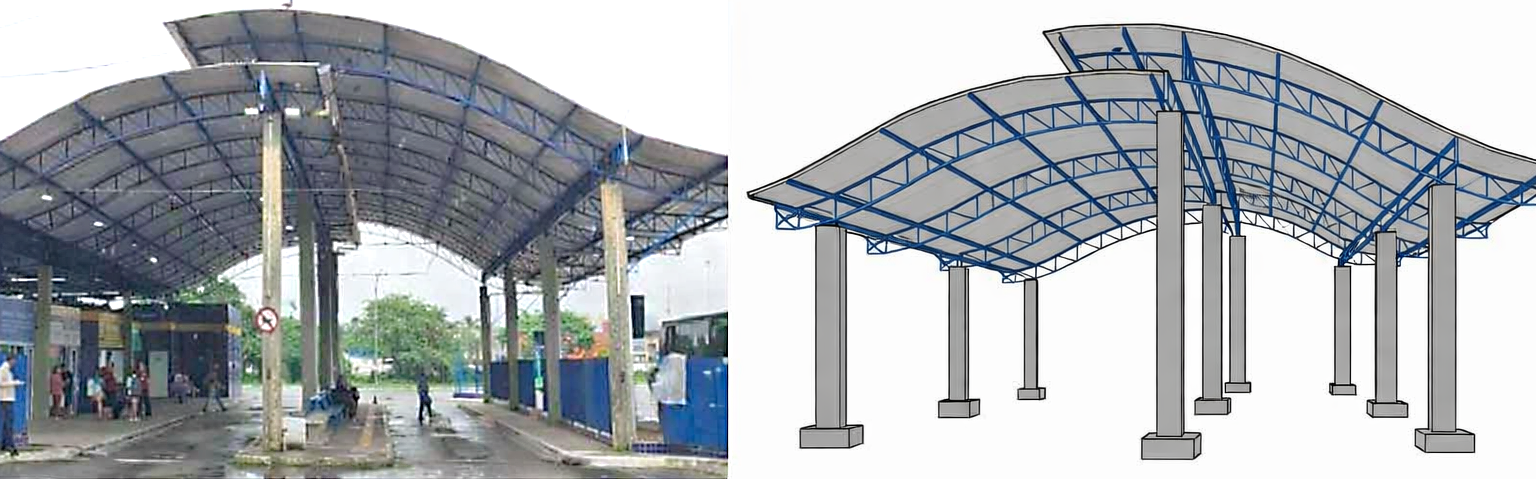
The structural reliability of steel structures throughout their service life depends not only on adequate design but also on the understanding of deterioration mechanisms, the characterization of the exposure environment, and the adoption of systematic inspection and maintenance strategies. This paper presents an integrated approach for assessing the reliability of steel structures by combining normative criteria, pathological manifestations, and structural diagnostic procedures. The fundamentals of structural reliability based on the limit states method are discussed, together with the quantification of atmospheric corrosion according to ISO 9223, with emphasis on estimating thickness loss in aggressive environments. The methodology is applied to a case study of a steel structure exposed to an environment classified between C3 and C4, in which recurrent pathological manifestations are identified. Additionally, a simplified numerical evaluation of the effects of section loss is performed by integrating ISO 9223 corrosion models with the geometric expressions of ABNT NBR 6355, highlighting the impact of corrosion on structural reliability.
Downloads
Article Details
Section

This work is licensed under a Creative Commons Attribution-NonCommercial-NoDerivatives 4.0 International License.